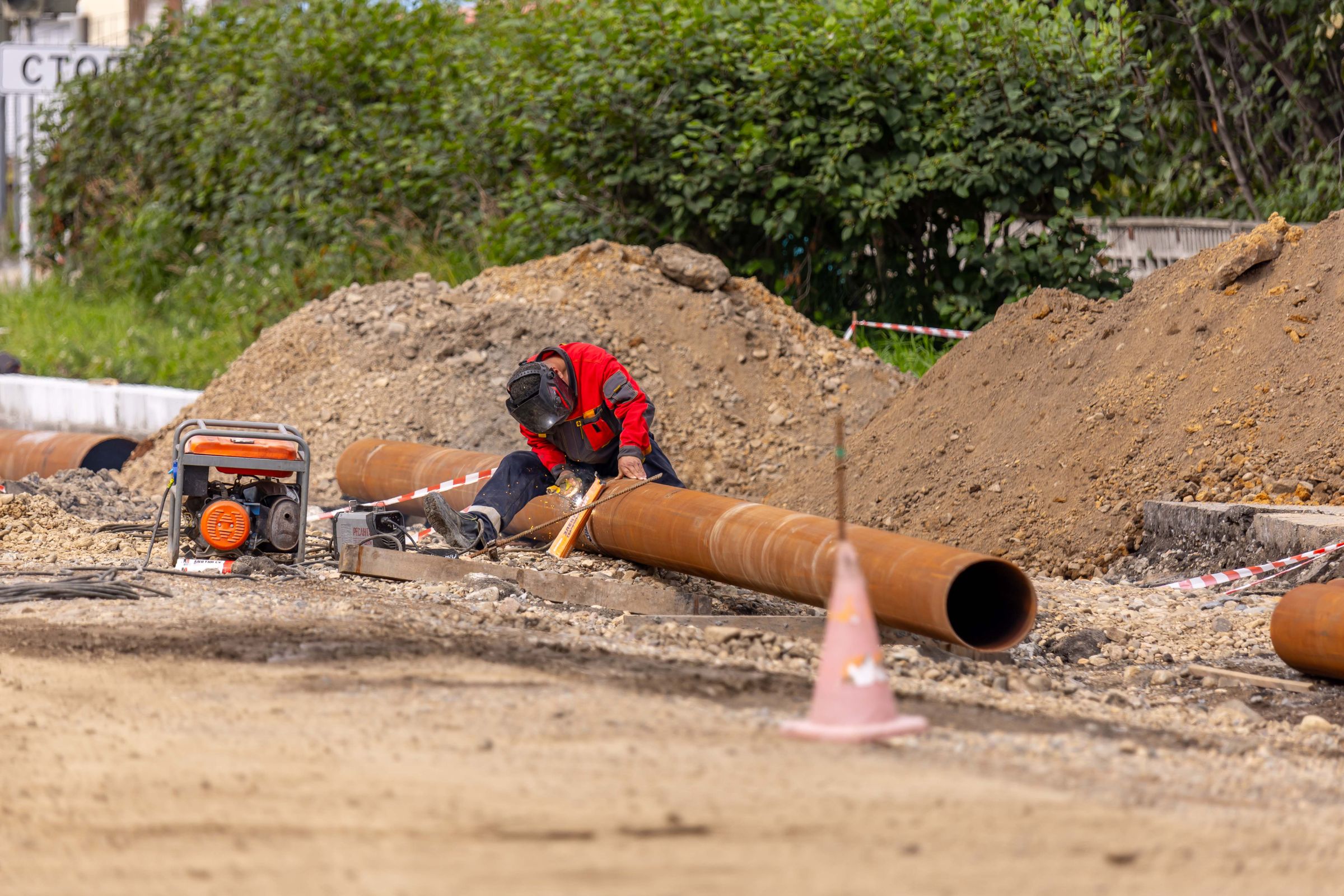
The work happens on the line.
Photo: Sergei Starostin / Pexels
The point
Repairs that hold.
AIME is for the people who perform OQ-covered tasks, mainly on pipelines already in service. Sleeve installation. Welding on a live line. Coating. Composite repair. Surface prep. Excavation and inspection support. The task, and the hand who does it.
Operators own the specs. AIME writes one simple, field-written standard for each in-service covered task, a standard competing operators can all accept.
Nothing here has to be invented. API was formed so competing oil companies could share common standards. NACE/AMPP CIP is a Levels 1, 2, and 3 credential the person owns, and operators write it into their specs. AIME follows that model.
Today every operator writes its own version of the same task. The qualification does not carry from one operator to the next. People treat that as just how it is. That is dangerous. Simple is safe, and simple costs less. The problem is the system, not any one company.
From the field, many repair failures trace back to the work itself: surface prep, cure, heat, Shore D hardness checks, and the conditions on site. The job is not done until the pipe is buried.
Federal rules keep getting written without hearing from the people who do the work.
Where we’re headed
Four steps. Stated in the open.
Applications open when those programs are ready.
01Write the field standard
One simple standard for each in-service covered task, written by the people who do the work.
02A portable credential
The worker owns it. Organized by covered task. Levels 1, 2, and 3.
03A standard installer record
One record for each repair. The same record, every time.
04A voice where the codes are written
Field hands at the table for ASME B31Q, API RP 1161, and PHMSA rulemakings.
The country is short on hands
1.7 million
skilled-trades openings a year through 2035.
9 in 10
construction firms can't fill craft jobs.
Sources: AGC 2025 Workforce Survey; Jobs for the Future and Burning Glass Institute (2026).
Why AIME
We're the ones who do the covered tasks. AIME gives the field a seat at the table, a way to learn from each other's jobs, and a credential the worker owns.
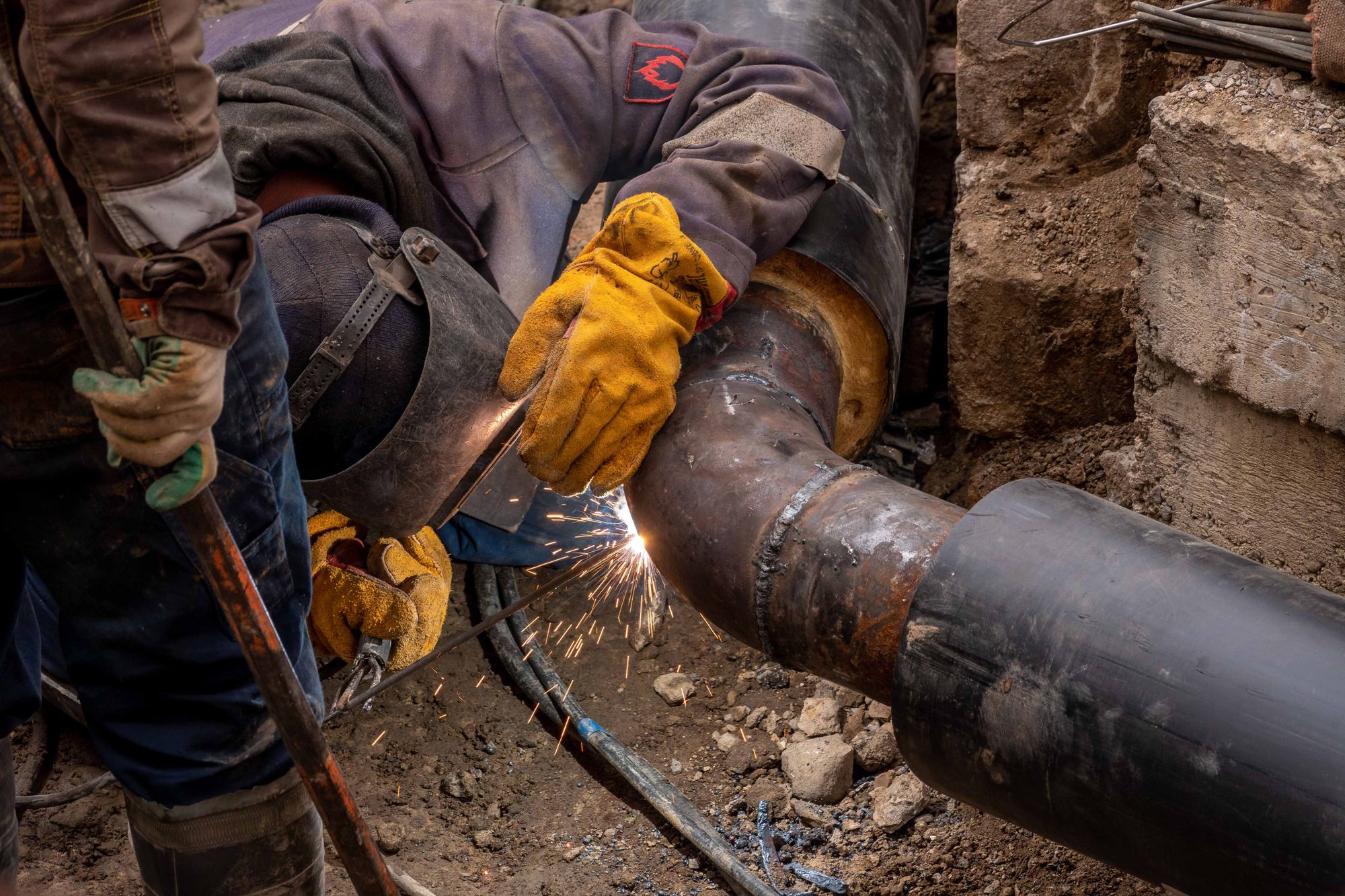
Voice from the field · Placeholder
“A field hand’s own line goes here.”
Field hand, Oklahoma
Placeholder. Not a real quote, and not a real name. Words from the ditch will replace this.
Who it’s for
The people on the job.
Contractor-run. Field hands have a free roster. Operators are welcome at no charge.
Members
Contractor companies
The companies whose crews perform the covered tasks. Dues by size, and a vote on the board.
Field Voice, free
Field hands
The people who perform the covered tasks. Join the Field Voice roster free.
No charge
Operators
Advisory and technical liaisons. No charge. The vote stays with field hands and contractors.
What you get
What a membership is for.
The Summit has a date. The rest gets built with the members. There is no payment on this site.
- Field-written practice library
- Lessons learned
- Operator-relations guidance
- Field Realities Summit
- Field Day
- Virtual roundtables
- A vote on the board
$1,500, $3,000 or $5,000 a year by company size, capped at $5,000. Individual field participation is free.
If you do the work, start here.
Contractors, field hands, and operators. Interest only. No payment.